Formulating with Functional Mushrooms: What Every Brand Should Know in 2026
Formulating with Functional Mushrooms: What Every Brand Should Know in 2026
The global functional mushroom market was valued at approximately $12 billion in 2025 and is projected to reach $20.7 billion by 2031, growing at a 9.45% CAGR. In the US alone, mushroom-based supplements hit $1.1 billion in 2023 and have continued at double-digit growth rates.
What was a fringe wellness interest five years ago is now a mainstream supplement category with serious consumer demand, significant retail presence, and an increasingly sophisticated buyer. Lion's mane and Cordyceps are transitioning from niche ingredients to mainstream cognitive and performance staples, mushroom coffee is a mainstream crossover format, and RTD formulas featuring lion's mane report 15% higher initial purchase rates compared to powder.
That maturation is good news for brands that take formulation seriously. The gap between products built on quality-verified extracts and those built on commodity raw materials is becoming visible to retailers and consumers alike. This guide covers what formulators need to know to be on the right side of that gap.
The real quality question: what is actually in the product?
Functional mushroom ingredients vary considerably in quality, and not in ways that are always obvious from a label. The single biggest source of variation is what the ingredient actually contains: genuine mushroom biomass with documented active compounds, or a diluted mixture where substrate material has not been fully separated from the mushroom extract.
Conventional mycelium cultivation typically involves growing mushroom mycelium on grain or wood substrates. The challenge is that grain naturally contains its own compounds, meaning a test result reflecting total compound content may be measuring carrier material rather than mushroom potency. A high number on a standard test does not always indicate a high-quality mushroom ingredient.
The more meaningful quality question is whether a supplier can demonstrate that what is in the product is genuinely what it claims to be, free from substrate contamination, tested against species-specific active compounds, and verified by independent laboratories. That is the standard NuLiv Science applies across the entire Prime Series.
How NuLiv Science verifies quality across the Prime Series
All Prime Series mushrooms undergo testing for active compounds, preservatives, microbial content, pesticides, herbicides, residual organic solvents, and heavy metals. Samples are additionally tested by independent third-party laboratories in the US for further quality verification. This is not a self-certification process.
Each species is standardised to its own species-specific biomarker rather than a generic compound that could be inflated by substrate. CordycepsPrime, for example, is standardised to 10% cordycepic acid, the biomarker synonymous with Cordyceps sinensis, and verified by DNA fingerprinting of the Paecilomyces Hepiali strain. That level of species-specific verification is the correct approach to mushroom ingredient quality, and it is what distinguishes a supplier with genuine manufacturing depth from one reselling commodity extract.
NuLiv's manufacturing partner holds the only government permit to produce fermented Cordyceps sinensis and Ganoderma lucidum (Reishi) in the entire country of China, a credential that reflects 25 years of regulatory standing and manufacturing relationship, not a recent market entry.
The eight species in the NuLiv Science Prime Series and their role
The Prime Series covers eight functional mushroom species, each selected from traditional medicine tradition and each with a distinct functional profile relevant to modern supplement categories.
CordycepsPrime (Cordyceps sinensis)
The energy and vitality ingredient. Produced via liquid fermentation with no grain or wood substrate, standardised to 8% cordycepic acid and DNA-verified for strain identity. Traditionally used for energy, endurance, and respiratory health. Relevant to sports nutrition, adaptogen blends, and general energy formulas. Dose: 500mg. Full details.
LionsManePrime (Hericium erinaceus)
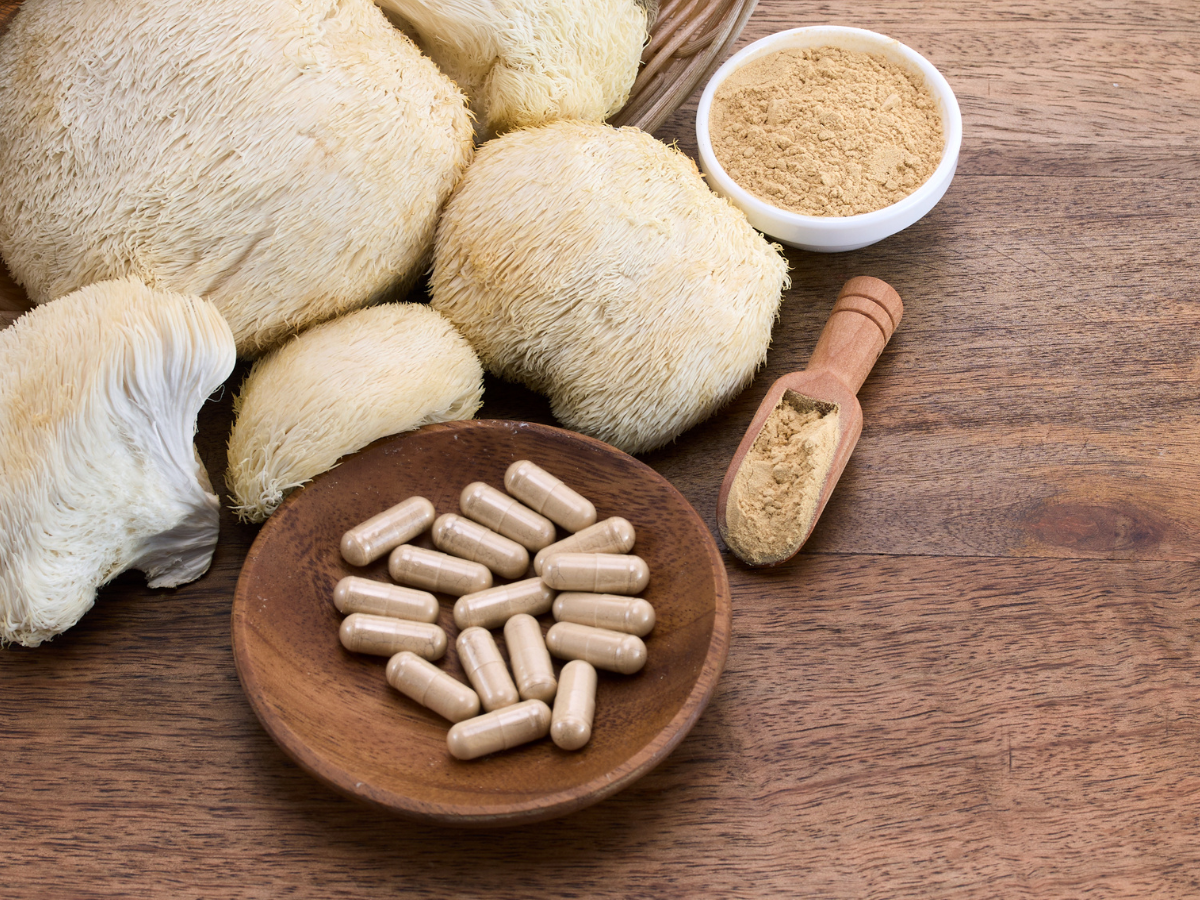
The cognitive health ingredient. Lion's mane is the most researched functional mushroom for neurological support. Its key actives, hericenones (from the fruiting body) and erinacines (from the mycelium), are of the only known dietary compounds that could support Nerve Growth Factor synthesis. A 2024 systematic review in Nutrients analysing 12 randomised controlled trials found that lion's mane supplementation at 1-3g daily improved cognitive function scores by an average of 15% in adults aged 50-80. Relevant to focus, memory, and long-term cognitive health formulas. Full details.
ReishiPrime (Ganoderma lucidum)
The adaptogen and stress resilience support ingredient. Known as the 'Mushroom of Immortality' in Traditional Chinese Medicine, reishi has one of the deepest research histories of any functional mushroom. Its bioactive compounds, including polysaccharides and triterpenes such as ganoderic acids, support immune health, stress adaptation, and antioxidant activity. NuLiv Science's manufacturing partner holds the only government permit in China to produce fermented Ganoderma lucidum. Reishi is projected to hold the largest market share of any medicinal mushroom species in 2026. Natural fit for stress, sleep, immune, and longevity formulas.
TurkeyTailPrime (Coriolus versicolor)
The immune support specialist. Turkey tail mushrooms contain two well-studied polysaccharide compounds, PSK and PSP, that are among the most researched immune supporting agents in the mushroom category. PSK is gaining traction in the medical field, reflecting the broader maturation of mushroom science into larger applications. Relevant to immune support, general wellness, and healthy ageing formulas.
ChagaPrime (Inonotus obliquus)
The antioxidant and longevity ingredient. Chaga mushroom has the highest ORAC score of any natural food source and contains betulinic acid alongside other bioactive compounds. Its antioxidant profile suits longevity, anti-ageing, and general health formulas where oxidative stress is a primary concern. Well positioned in the growing longevity supplement category.
MaitakePrime (Grifola frondosa)
The metabolic and immune ingredient. Maitake research has focused on D-fraction polysaccharides with immune-modulating and blood glucose-supporting effects. The name means 'dancing mushroom' in Japanese. Relevant to metabolic health, weight management support, and immune formulas.
ShiitakePrime (Lentinus edodes)
The cardiovascular and immune support mushroom. Shiitake contains lentinan and eritadenine, bioactive compounds studied for cardiovascular and immune effects. Consumer familiarity with shiitake as a culinary ingredient gives it accessible label recognition, which is a practical marketing advantage in mainstream retail.
AgaricusPrime (Agaricus blazei Murrill)
The immune and vitality ingredient. Also known as ABM, Agaricus blazei Murrill is valued for its immune-supporting compounds and general vitality applications. Particularly strong in the functional mushroom enthusiast and integrative health markets. Available in both conventional and organic options.
How to think about mushroom combinations
Single-mushroom products have their place, particularly where the positioning is specific: a lion's mane cognition formula, a Cordyceps endurance product. But much of the category growth is in blend formats, where multiple species are combined for a broader effect profile.
The key to a well-constructed blend is clarity of purpose. A formula that leads with one or two primary benefits and uses supporting species to add depth is more effective than eight species at doses too low to matter. The lead ingredient should be dosed meaningfully. Supporting species add breadth without diluting the primary positioning.
A practical example: an endurance and resilience stack might lead with CordycepsPrime for energy and vitality, add ReishiPrime for stress adaptation and immune support, and include TurkeyTailPrime for immune resilience during heavy training blocks. Three species, a coherent narrative, a clear consumer.
A cognitive health blend might pair LionsManePrime as the lead active for brain support with ReishiPrime for stress modulation and ChagaPrime for antioxidant protection of neurological tissue. Again, three species, each doing a distinct job.
Market trends shaping mushroom formulation in 2026
Buyers are increasingly seeking specific species for specific outcomes: lion's mane for brain health, reishi for stress and immunity, Cordyceps for energy and endurance. This is species-specific consumer awareness, not generic 'mushroom supplement' demand. It rewards brands that can tell a clear ingredient story rather than hiding behind a proprietary blend with no visible composition.
Format innovation is accelerating. RTD formats featuring lion's mane for focus report 15% higher initial purchase rates compared to powder. Mushroom coffee is a mainstream crossover category. Gummies are gaining ground in the broader health supplement market. For B2B formulators, this signals demand for mushroom extracts that perform consistently across powder, capsule, gummy, beverage, and functional food applications.
Transparency is becoming a baseline expectation. Consumers and retailers want to know the species, the sourcing, the form (mycelium or fruiting body), and ideally some indication of how quality is verified. Suppliers who cannot answer those questions with specificity are increasingly being replaced by those who can.
Questions formulators ask about functional mushroom ingredients
What are the best functional mushroom ingredients for formulators?
It depends on the product category. For cognitive health, lion's mane is the clearest choice given its NGF research. For energy and endurance, Cordyceps sinensis. For immune support, turkey tail and reishi. For antioxidant and longevity positioning, chaga. In all cases, quality-verified extracts standardised to species-specific active compounds and tested by independent laboratories are the right starting point.
How do I know if a functional mushroom ingredient is high quality?
Ask your supplier whether the ingredient is tested for species-specific active compounds rather than generic proxies, whether substrate markers are tested for and absent, whether independent third-party laboratory verification is available, and whether there is documentation of the production process. NuLiv Science provides this documentation across the full Prime Series.
What is the difference between mycelium and fruiting body mushroom extracts?
Fruiting body extracts come from the actual visible mushroom. Mycelium is the root-like network. Both can be used in supplements, but mycelium cultivated on grain substrates can retain substrate material that dilutes active compound concentration. The key question is not mycelium versus fruiting body per se, but whether the production process ensures a clean, substrate-free product verified against species-specific biomarkers.
Can you combine multiple mushroom species in one formula?
Yes, and blends are a well-established and growing format. The key is a clear primary benefit, supporting species that each add a distinct functional dimension, and meaningful doses of the lead ingredient. Eight species at negligible doses is not a functional formula.
What products are functional mushroom ingredients best suited to?
Capsules and powders remain the core formats. Gummies, RTDs, functional beverages, mushroom coffee and tea blends, chocolate and energy bars, sports nutrition products, and pet products are all established and growing applications. NuLiv Science's Prime Series has options to perform across all of these formats.
Download the Complete Guide to Formulating with Functional Mushrooms for full details on all eight Prime Series ingredients, application guidance, and market positioning. Request samples to explore the range.
.png)


.jpg)
.jpg)
.jpg)