Muscle Recovery After Menopause: What New Research Is Exploring
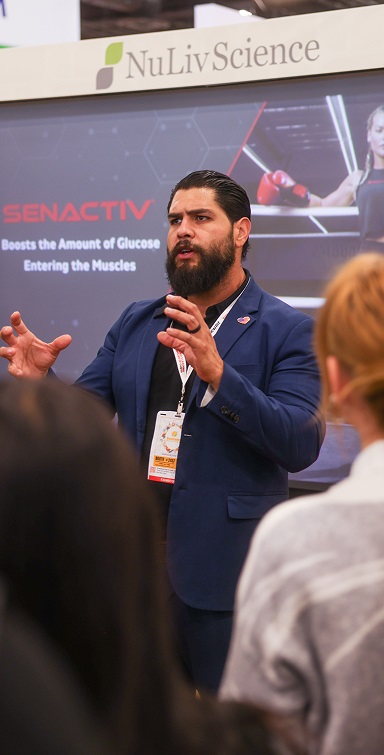
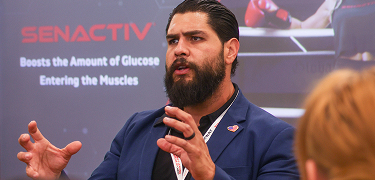
A new human study looked at what happens inside the leg muscles of postmenopausal women after a strength workout. Women who took Senactiv®, a clinically studied ingredient from NuLiv Science, had more repair-helping stem cells and more mitochondria in their muscle after exercise. Registered dietitian Dr. Rosa Keller, PhD, RD, explains what that means and what it doesn't.
Strength training is having a big moment for women. More women are lifting weights than ever, and in 2025 women were more likely than men to log strength workouts on apps like Garmin and Strava. Fitness groups like the American College of Sports Medicine and ACE both put menopause and women's health on their 2026 trend lists.
The good news is that muscles still respond to training after menopause. A 2026 review of studies found women got stronger from resistance training whether they were before or after menopause. But many women still don't get told to lift. In one 2026 survey by PVOLVE, two out of three women said a doctor or trainer had never told them to strength train.
So here is the question researchers asked. After menopause, does muscle repair itself the same way it did before? And can anything support that repair?
After menopause, women make less estrogen. That change affects how muscle rebuilds after exercise. It also affects bone strength and leg strength. Those things matter for staying steady on your feet and enjoying life as you get older.
“Especially among women, they’re much more comfortable with the idea that resistance exercise is really, really important… It seems like there’s been a really big shift in that across the board” says Dr Keller.
Why study postmenopausal women?

Hormones like estrogen and progesterone do more than most people think. They work with your cells to spot the tiny bits of damage that exercise causes. Then they help call in the cells that do the repair work.
When those hormone levels drop after menopause, that repair process can get slower or work less well. That's why this group is so interesting to study.
The women in this study were also untrained. That means they didn't already lift weights regularly. For someone new to strength training, how well muscle repairs after a workout matters a lot.
The researchers had the women do resistance exercise on a leg press machine. Dr. Keller liked that the study tested a real workout in the group it was trying to learn about.
Dr Keller says, “Women that are postmenopausal don’t produce as much estrogen anymore, right? And so they have a lot of downstream effects that then impact things like muscle regeneration after exercise, bone density… So for that reason, I really appreciated that this study looked at resistance exercise in postmenopausal women.”
Think of your muscle as a construction site

Dr. Keller uses a simple picture to explain what's going on.
When you work out, you create a kind of "good stress" in your muscles. It's like a signal that tells your body, "We need to fix this and build it back stronger."
Now picture that muscle as a construction site.
In a younger person, the site has plenty of workers. The generators run well. Old materials get cleared away fast, so new building can start.
After menopause, the site looks different. There are fewer workers. The equipment is older. And some "retired" workers are still hanging around because they aren't being cleared out fast enough. The body's clean-up process has a name: Mitophagy. It's how your cells clear out old parts to make room for new ones.
The study asked a simple question: can Senactiv® support bringing more help to the site?
“You can think of it as like a construction site. Someone like you or me that’s younger, we’ve got a lot of construction workers. We’ve got generators. We’ve got everything working relatively at 100%… For an older woman, the generators are there, but they’re old and they’re not working properly, or there’s not as many of those construction workers recruited. So you need help, right?” says Dr Keller.
What the study looked at
The study was run by researchers at the University of Taipei and published in the Journal of Ginseng Research. It looked at three main things.
1. Stem cells after exercise. Stem cells are like the body's spare workers. They can travel to where they're needed and help with repair. The researchers counted how many showed up in the muscle after the workout.
2. Mitochondria moving into the muscle. Mitochondria are tiny power stations inside your cells. They make the energy your muscles use to move and rebuild. In this study, researchers tracked mitochondria carried by stem cells moving toward the muscle. Dr. Keller points out that these are not the same as the muscle's own mitochondria. Think of them as extra generators being delivered to the site.
3. How ginsenoside Rg1 might fit in. Ginsenoside Rg1 is a natural compound found in ginseng, and it's a key part of Senactiv®. Its shape is a lot like the shape of sex hormones such as estrogen. Dr. Keller describes it as a "lock and key" fit. Because of that shape, Rg1 may support some of the same repair signals, like helping mitochondria move to where muscle needs to rebuild.
Dr Keller says, “Its cellular structure is very similar to that of estrogen or progesterone. It’s kind of like a lock and key mechanism.”

What they found
In the published summary, women who took Rg1 before exercise had about twice as many high-mitochondria stem cells in their muscle afterwards. Their total muscle mitochondria content also roughly doubled compared with the placebo trial. The team also saw more neural progenitor cells, which are early-stage cells linked to the nerve side of muscle.
This builds on earlier Senactiv® research in younger, trained men, where people rated their workout as feeling easier after taking Rg1.
Want the full ingredient story? See the Senactiv® ingredient page, dig into the published papers in the NuLiv Science Research Library, or browse the Science Hub.
Does "steroid-like" mean dangerous?
When people hear that a plant compound has a shape like a hormone, they often worry. Dr. Keller says that worry is understandable, but it's usually a misunderstanding.
A mild, estrogen-like effect "does not necessarily mean it's dangerous," in her words. Lots of everyday foods contain plant compounds with shapes similar to hormones.
She gives soy as an example. People sometimes worry that soy affects men's hormones. But she explains that a man would need to eat enough soy to fill a room before it had any negative effect on estrogen.
“You’d have to consume as much soy that we could fit into this room for that to have any sort of negative effect on your estrogen. And to have an estrogenic effect does not necessarily mean it’s dangerous” says Keller.
The takeaway is simple. Having a similar shape to a hormone is not the same as acting like a strong hormone in your body.
Why Dr. Keller took this study seriously
Not all supplement research is equal. Dr. Keller looked closely at how this study was set up, and three things stood out.
It was a real human clinical trial. The study was randomized and double-blind. That means neither the women nor the researchers knew who got Senactiv® and who got a placebo (a look-alike with nothing active in it).
Each woman was compared to herself. It was a crossover study. Every woman did the workout twice, once with Senactiv® and once with the placebo. There was a break in between, called a washout period, so the first round wouldn't affect the second. Comparing someone to herself cuts out a lot of noise.
It was exploratory. The researchers measured lots of things and followed up on what looked important. That's a normal first step when scientists want to understand how something might work.
She also liked that the researchers were honest about the limits. It was a fairly small study. Some results were statistically significant, which means they were unlikely to be down to chance. Others were close but didn't quite get there.
“I really liked how open they were and transparent with some of the limitations and where this needs to go next… The study design was very well done” says Keller.
What she'd like to see next
This study used a single dose before one workout. Dr. Keller would love to see what happens over a longer stretch. Here's her wish list:
- Daily dosing for a month, not just one dose, to see what builds up over time.
- Real-world measures, like how long someone can keep going before they're exhausted, how hard the workout feels, and how they perform one, two, or three days later.
- How people actually feel while they recover. Researchers call this qualitative data. It's about real experiences, not just numbers from a lab.
Keller says, “What happens when an individual takes this every day for a month?… It would be even great to ask individuals, how does recovery feel? How do you feel the next day? How do you feel two days later when you do it again?”
The good news is that the University of Taipei has already registered a longer follow-up trial in women over 60 who do regular resistance training.
How a dietitian checks any supplement ingredient
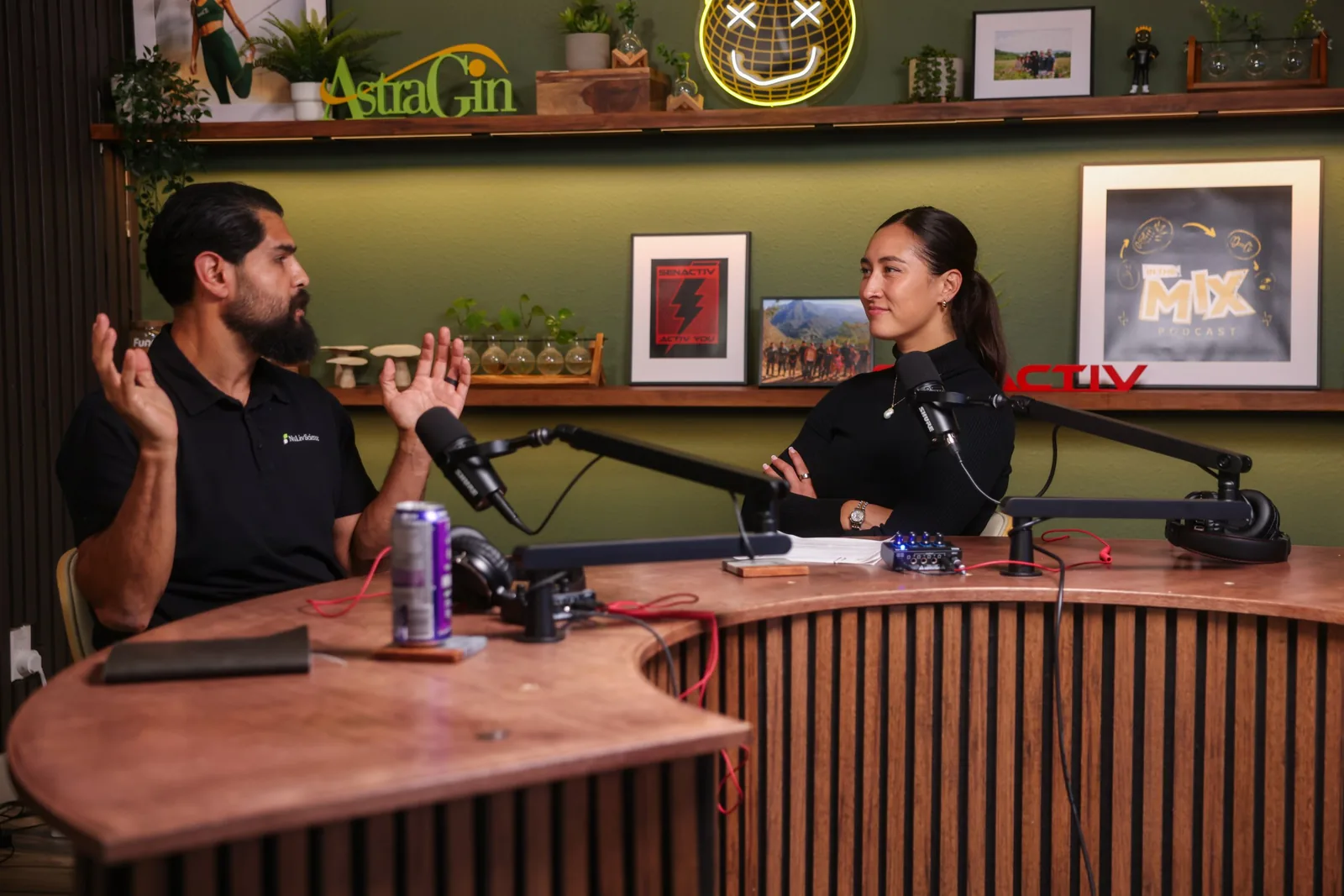
Dr. Keller uses the same three steps for every ingredient she looks at. You can use them too.
- Safety first. Has it been well tested? Are batches tested, especially for athletes who get drug tested?
- Then the clinical data. Have there been proper human studies, and what did they find?
- Then real-world experience. How does it work for real people in everyday life?
Keller says, “When it comes to nutraceuticals, supplementation, number one is safety. Is this safe? Is it well tested? Are batches tested, especially for athletes? And then, what does the quantitative data say? Has it been done in clinical trials? And then also the qualitative experience I think is very important as well.”
For reference, Senactiv® has been listed as an Informed Ingredient, a program that tests for banned substances. [CONFIRM current certification status with NuLiv Science before publishing.] You can read the human studies behind NuLiv Science ingredients in the Research Library.
Sidebar: Eating for strong muscles after 50
Dr. Keller sees a big shift in the women she works with. More of them now see strength training as something important, not optional. Here's how she thinks about food to support it.
Carbs fuel the repair crew. Carbohydrates power the mitochondria that help muscles rebuild. Protein has lots of other jobs to do, so it shouldn't be your body's main fuel.
Protein matters more as you age. Your body gets less efficient at using protein over time. That makes getting enough good-quality protein more important, not less. Experts at Stanford Lifestyle Medicine also stress pairing it with strength training through the menopause transition.
Quality beats the number on the label. Protein is everywhere right now. You can buy protein cookies, protein cereal, and even protein coffee. But many of these are ultra-processed foods. A 2026 FoodNavigator report called this the protein paradox: adding protein to a snack often means more processing, not less. Where your protein comes from matters as much as how many grams you get.
Whole foods first. Supplements are there to fill gaps when life gets busy, not to replace real meals.
Her simple food test: Could you make it at home? Or could you at least explain how it's made? If not, it's worth a second look.
“The easiest way to think about it as somebody who wants to eat as close to whole foods as they can is, can you make it at home?… And if you couldn’t make it at home, you could at least describe how it was made” says Keller.
FAQ
Why does muscle recover differently after menopause?
After menopause, your body makes less estrogen and progesterone. These hormones help your cells notice exercise damage and call in repair help. With less of them around, muscle repair can be slower or less efficient, especially if you're new to lifting.
What did the new Senactiv® study find in postmenopausal women?
Women who took Senactiv® before a leg workout had about twice as many high-mitochondria stem cells in their muscle afterwards, plus more total mitochondria, compared with when they took a placebo. It was a small, randomized, double-blind crossover study, so it's an early but promising look at how muscle repair works.
Is ginsenoside Rg1 a steroid?
No. Rg1 is a natural compound from ginseng. Its shape looks a bit like sex hormones, which is why it's sometimes called "steroid-like." Dr. Keller explains that a similar shape doesn't mean it acts like a strong hormone or that it's dangerous.
Can I get the same amount of Rg1 from eating ginseng?
Not really. Dr. Keller notes that you can't reach the levels used in the study through whole foods alone. That's where a standardized ingredient like Senactiv® comes in.
Is it too late to start strength training after menopause?
No. Research from 2026 shows women get stronger from resistance training whether they're before or after menopause. If you're new to it, a qualified coach can help you start safely.
How much protein do women over 50 need?
Protein needs go up with age because your body uses it less efficiently. The exact amount depends on your size and activity level, so it's worth asking a registered dietitian. Focus on whole-food sources first.
[EDITOR: Add FAQPage schema for this section. Run past NuLiv Science compliance, especially the Rg1 and steroid answer.]
A gift of ginseng root
Dr. Keller's interest in this research got personal. Her family recently gave her some ginseng root, and she's curious about how to use it.
But she's also realistic. Eating ginseng root won't get you to the levels of Rg1 used in this study. Whole foods are a great foundation. Studied ingredients are what researchers use to see what specific amounts can do.
Keller says, “My family is Taiwanese and they gave me a huge bag of ginseng. So I have a bunch of ginseng root at home and I actually haven’t even thought about how I’m going to use it… Could I put it in a tea? I don’t think you can get to levels that were done in this study.”
Want to learn more? Explore the Senactiv® ingredient page, see NuLiv Science's healthy aging ingredients, read more on the NuLiv Science blog, or request a sample to start formulating with Senactiv®.
Disclosure: Dr. Rosa Keller, PhD, RD, was compensated by NuLiv Science to review and discuss this study on camera. Compensation covers her scientific review only; she does not endorse NuLiv Science, its ingredients, or any product containing them. The study discussed was funded by NuLiv Science. Educational content only, not individualized medical or nutrition advice.