The Category Was Already Crowded. Melting Forest Bet on a Gap Instead.
Most functional beverage brands find their margin by cutting cost out of the can. Melting Forest went the other way. It added a patented, clinically studied ingredient, one better known in sports nutrition pre-workouts than in a mushroom-covered sparkling water, and built the whole positioning around a customer that legacy energy brands weren't talking to.
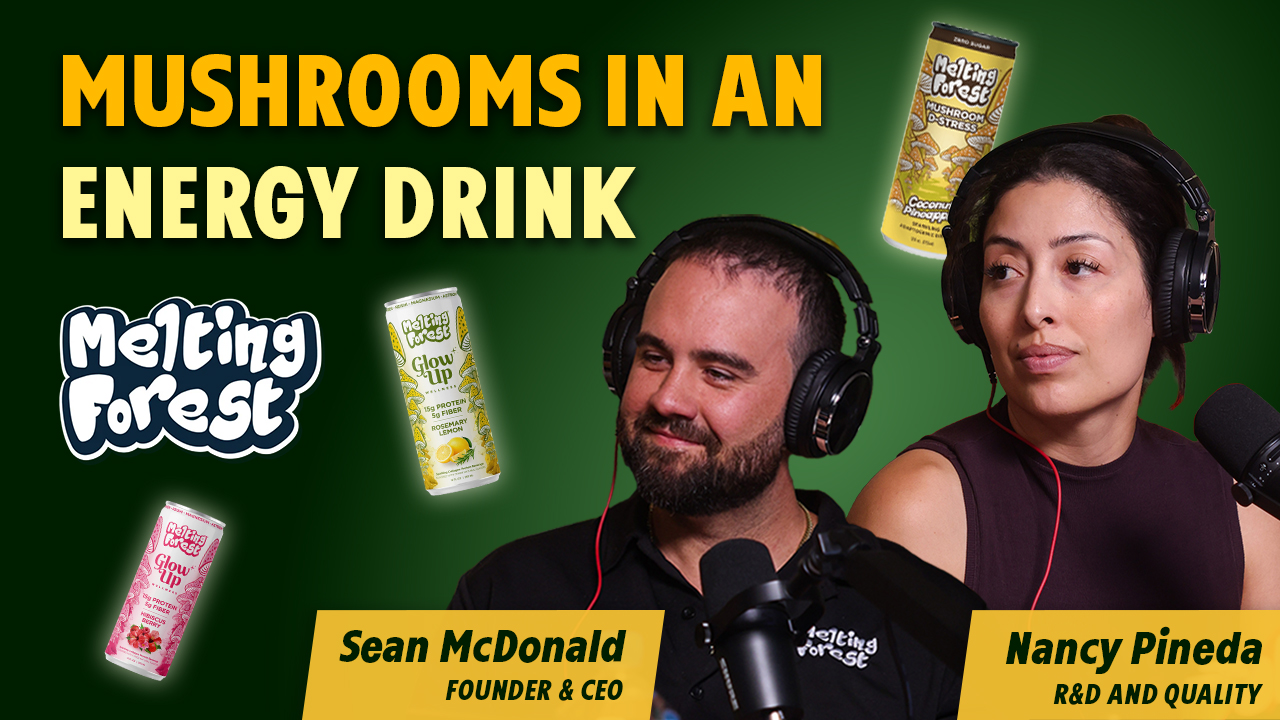
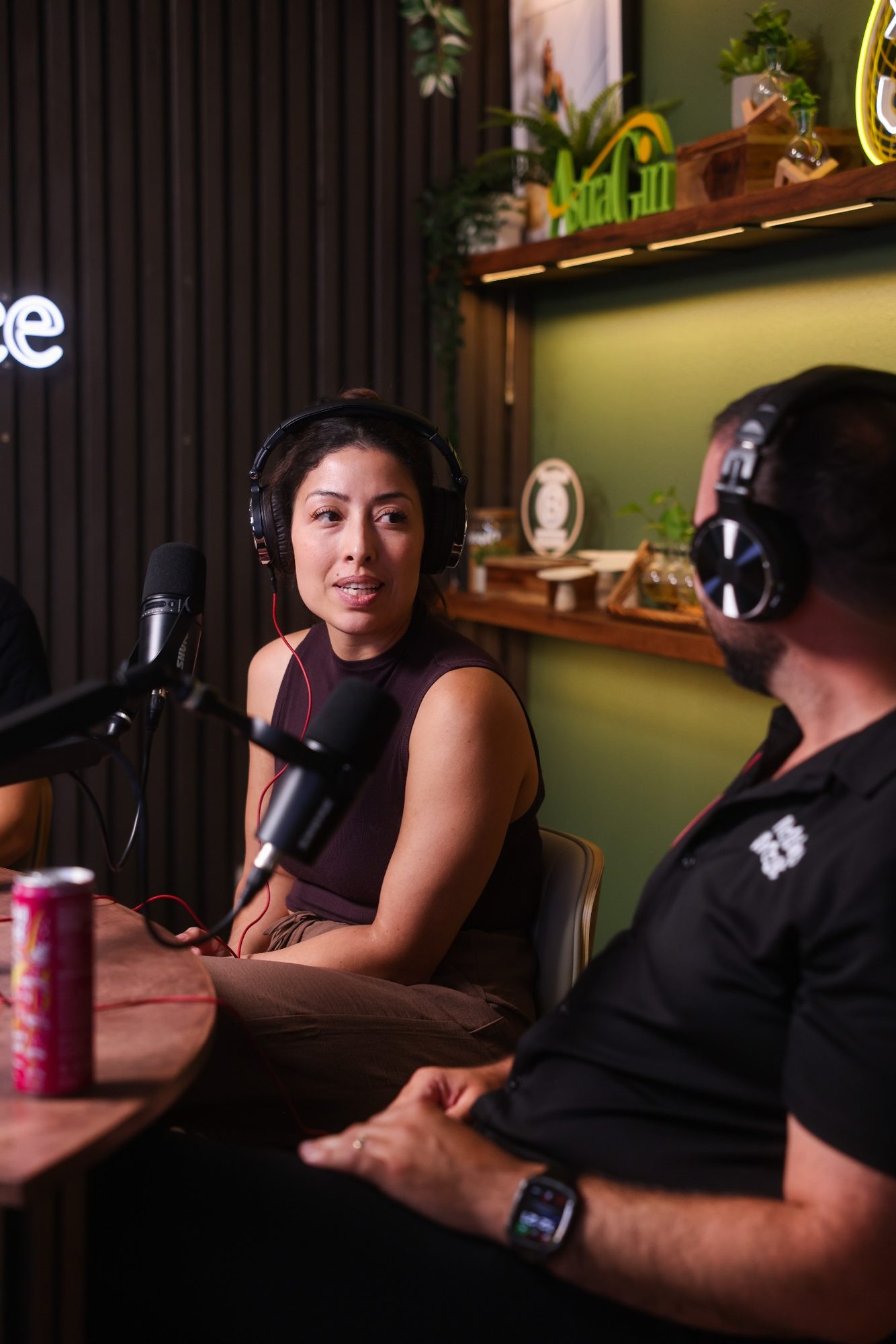
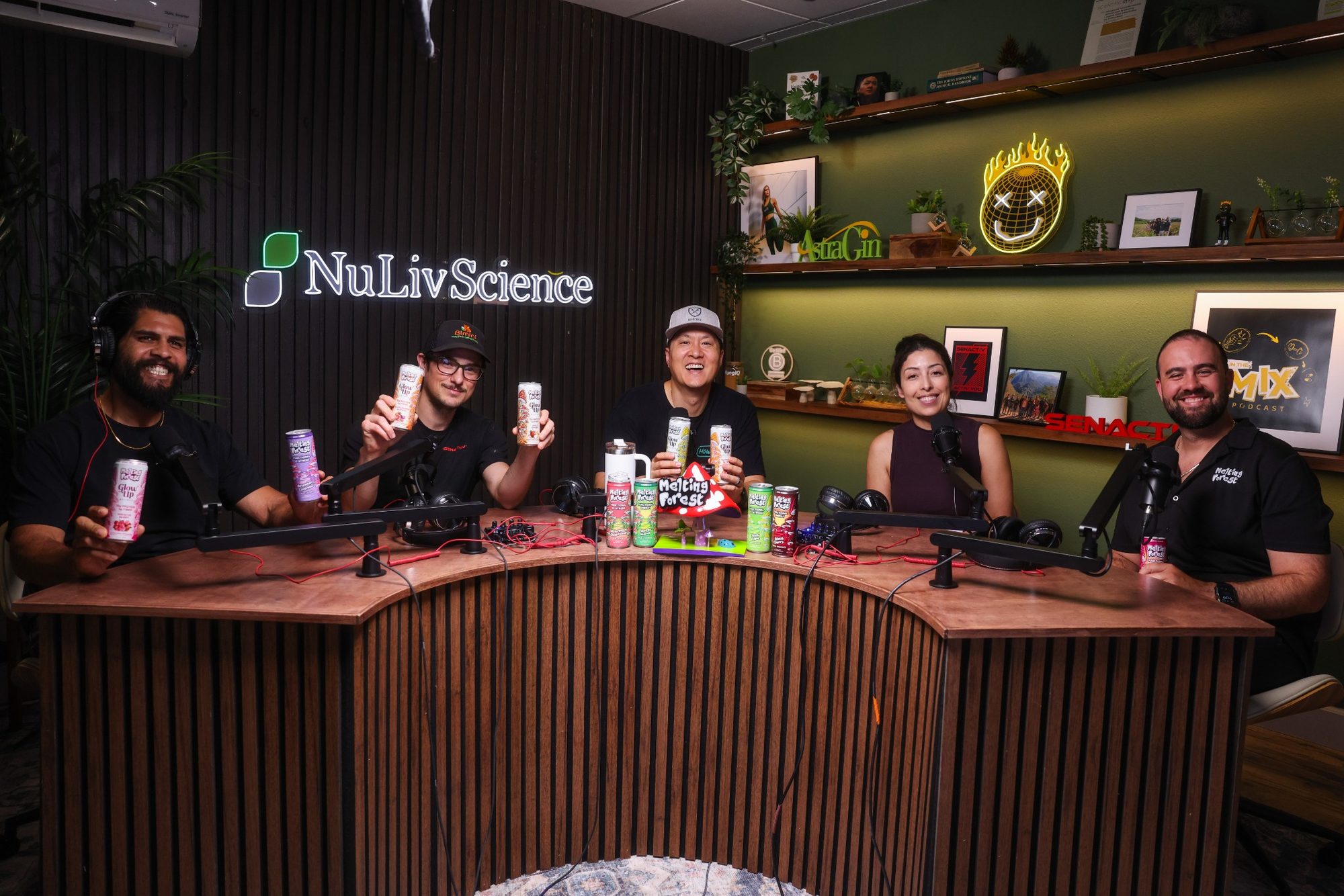
On NuLiv Science's In the Mix podcast, founder Sean McDonald and Nancy Pineda, who runs operations at Melting Forest, walked through why that decision made sense, what it actually cost, and how a two-person mushroom-drink company ended up moving 10,000 cans a day.
The category was already crowded
Energy is one of the most saturated shelves in beverage, and buyers in that aisle default to the same question every time: what's your demographic. Sean's answer never fit the format they wanted.
"Everybody always tries to say what's your age and demographic," he said. "I'm like, well, it's more need state of how you feel that day and what you need... or didn't know you needed." When pressed for hard numbers, the honest answer is closer to "that 25 to 30 year old on up," because that's who's actually in grocery. But Sean doesn't lead with the number. He leads with the state: tired, wired, stressed, depleted, in ways a single age bracket doesn't capture.
That's the thesis the rest of the post hangs on: the category wasn't the problem. The audience assumption was.
From off-road racing to CBD to mushrooms
The original plan for this section assumed Sean left one category behind to build Melting Forest. That's not quite what happened, and the real path is more interesting.
"I had an off-road vehicle company years ago," Sean said. "Raced the Baja 1000... went into that into the trailer manufacturing and then actually into kind of the dispensary world and CBD and things like that. And it just was a natural foray into the mushrooms and everything." He built off-road vehicles, raced a stripped-down class-3000 buggy at the Baja 1000 with a family pit crew, then moved through trailer manufacturing into cannabis dispensaries and CBD, and from there into mushrooms.
CBD Living isn't a company he left behind, either. It's still running. "We still have CBD Living after 10 years," he said. "This could be another legacy brand." Nancy has been with him across both companies for a decade: "You've been there for 10 years now," Sean said to her on the podcast. "Too long," she laughed back.
The CBD years left him with a specific warning he carries into Melting Forest. "We saw that from CBD world too," he said of the current wave of low-minimum-order beverage brands. "A lot of people were just jumping in the category, going to a white labeler, creating some gummies, having no clue the dosage that was in it. Consumer got real no benefit from it, and it kind of gave that disdain, or snake oil if you will, to the industry." He sees the same pattern risk building in RTD now.
What shoppers think "mushroom drink" means
Before Melting Forest was in a single store, Sean was already testing the gap between what he was selling and what people assumed he was selling.
"I remember going to Bristol Farms, Yorba Linda, the closest one, and taking some sample cans that weren't even in production yet, sticking them on the shelf, and people walking by going, 'Oh, what's...' and it's grabbing their attention," he said. "It's in a sea of cans that are just pastel colors at the time, because pastel was the hot color. It just was something different, and that's what we wanted to be." The photos from that shelf became the retailer deck.
The name itself came from the same instinct toward disruption. "The idea was the melting, kind of bringing that element of psychedelics if you will," Sean said, "and then the forest just bringing the best ingredients we could from the forest." He confirmed the obvious question directly on the podcast, when asked if people assumed it was a psilocybin drink: "Yeah, I mean, there's definitely that." Some of it worked against him early on. "There was a couple national retailers that they were kind of put off by that," he said, which is exactly why Melting Forest started in independents, Bristol Farms, Lazy Acres, its "backyard of SoCal," instead of chasing big-box placement first.
Functional mushroom drinks are one of the fastest-growing categories in beverage right now, but the category had earned a bad reputation for two specific reasons. "Mushrooms have always been around, but they couldn't get them to dissolve in a beverage," Sean said. "A lot of the companies who were coming out with the beverages, either the mushrooms are settling at the bottom, or they're saying, hey, there's two, three grams, but that's not actually true. They're using extract ratios." Melting Forest worked directly with its supplier to solve for solubility instead of hiding behind either problem.
Making it taste like something people want to drink
The real formulation story here isn't about masking a bitter mushroom flavor. It's about refusing to solve taste with sugar or aftertaste-heavy sweeteners, and about a health logic that runs underneath the whole product line.
"This doesn't have any fake sugars, it's stevia," Sean said, tasting Glow Up flavors live on the podcast. "We also source a specific type of stevia blend. We want to hear our consumers, and they don't want that aftertaste. So we're willing to put in the extra cents... we sourced, took our time to find something that doesn't give that aftertaste."
The bigger formulation philosophy is about what caffeine is actually for. "A lot of us go drinking caffeine thinking that's going to help the problem, but you're not going to the actual systemic issue," Sean said. "Why am I so tired? Why am I constantly reaching for that extra energy drink? You need to fix the underlying issue, which is your immune system... You have the mushrooms for immunity, which is the base of everything. If you don't have a good immune system, it doesn't matter how much caffeine you drink, it's never going to work."
The cordyceps question
Cordyceps was chosen for what it supports, not for a performance promise, and the format problem was solved before the flavor problem was.
"We do have a full-spectrum cordyceps," Sean said. "It's not extract. It's beverage grade. It's 20 microns in size, so it disperses in a can. There will always be a little sediment because it's whole, but when you shake it, it just disperses. No sensory issues." Caffeine sits at a deliberately moderate 150mg, paired with L-theanine rather than the taurine-and-citrulline stack most energy drinks default to.
Melting Forest tracks its formula in public versions. "We call it 1.0, 2.0, 3.0 internally," Sean said. "We didn't launch one product and say it's perfect, it's done. We launch something that we believe was ready for the market, put it out there, and as we get feedback... little tweaks here and there." That iterative approach is part of why the product built a following before it had a marketing budget behind it, including a Bristol Farms staffer who once recommended Melting Forest to Sean in the aisle without knowing who he was.
The math on adding a patented ingredient
This is the section that explains everything else. Sean was asked directly why Melting Forest didn't strip cost out of the can the way legacy brands do to protect margin.
"As you grow, you try to strip every cent out of that can possible," he said. "I know the large legacy companies, they're pinching pennies and trying to take everything out of it to a point where, is it really functional anymore? That's questionable. We didn't go that route, because you could try it once, that's great, maybe you'll buy it again, but if you actually drink that full can and feel that benefit, we'll get you coming back. Our reorder rates are showing that. We really believe in putting an efficacious dose in the product."
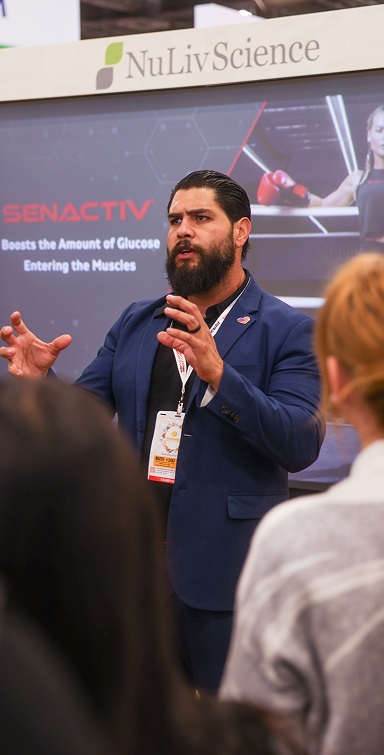
Senactiv came out of a trade show conversation with a NuLiv Science rep. "I think it was at a show," Sean said. "One of the sales reps came up to us and we just started talking, and then it just went. We definitely wanted to, when we were first launching, not go the traditional energy drink route and do the citrulline and the taurine and just keep adding those ingredients." Senactiv's reputation was built in sports nutrition and pre-workouts, a very different shelf than the one Melting Forest was targeting, and that mismatch was the point. "We wanted it for the mother, for the students, for the worker in the warehouse, for the truck driver," Sean said. "Anything that can go longer which doesn't give you those jitters."
The proof point isn't the caffeine number. "Everyone else has 150 milligrams or 200 milligrams of caffeine," Sean said. "Why is this different? So they have to trust it's the other ingredients." Customers report the drink feels different, and the label backs that up: at a moderate 150mg, the difference isn't coming from the stimulant.
What he's learned from mass retail
Melting Forest is now in just shy of 8,000 stores, including Target, Sprouts, multiple Kroger divisions, Ralphs, Stater Bros, Bristol Farms, World Market, and a recent Canada launch. Growth has outpaced its own visibility into it. "There's a lot of independents that are just pulling it through," Sean said, "so a lot of times we'll find out about stores after the fact."
The break that changed things was Kroger. "We were lucky to get an opportunity in King Soopers, which is the Colorado Kroger division," Sean said. "That buyer was really intrigued by it. He saw us actually at the last Expo East show, before they changed it to Newtopia now as they call it... he took a chance on it and then brought us into his stores. We did a shipper program, and that really helped us get a foothold in Kroger." For founders trying to get in front of buyers in the first place, his advice is unglamorous: "LinkedIn's a great place. Really just messaging, even myself messaging them as the CEO to a lot of these companies, goes a long way. Just a simple email or LinkedIn really does work these days."
The philosophy underneath all of it is fail fast. "I'd rather have 200 strong stores or 20 strong stores before we have 2,000," Sean said. "Our big mentality is fail fast. Let's go into a chain of stores with a new product line and let's fail fast. Either it works or it doesn't work. And if it doesn't work, why didn't it work? Let's learn from it so we can improve it and try it again." The honest velocity bar for staying on an RTD shelf backs that up: "Anywhere from three to six units per store per week," he said, "which doesn't sound like a lot, but you think about how many items are in that store overall... you're hoping that you get three or six people every week to take your product at minimum."
That's also why Costco has stayed regional-only so far. "It's more just regional trials, which makes sense," Sean said. "I'd never say let's roll out to Costco nationwide. Let's make sure it actually works in your region, in your backyard. They say it's hardest to win your backyard." His broader read on mass retail: "You can have 2,000 stores, which is great, but now you have to get consumers into that aisle, into the shelf. I wouldn't say it's easy to get on the shelf, but in the journey, that is the easier part. Now it's making sure you stay on the shelf. Start small and then grow is the biggest thing."
Glow Up and the 15g of collagen nobody talks about
Melting Forest saw the protein wave coming before it broke. "We saw the protein trend coming. We saw it at Expo West... especially with GLP-1s," Sean said. "Anybody within reason can go throw protein into a soda. We wanted to make sure we found a need state that made sense." Fifty other brands launched protein beverages the same year Glow Up did. "If there is a GLP-1 trend, what's the trend beside it? Oh, fiber." Sean's line on why Glow Up isn't sold as a protein shake: "If you want to have more protein, have a piece of chicken."
The fiber choice came with a deliberate cost. Nancy follows a low FODMAP diet herself and drove the decision. "I follow a FODMAP diet, meaning I'll have a sweet potato, but I'll have a certain amount," she explained. "Certain fibers have certain oligosaccharides that people may have sensitivities to... people may see certain fiber drinks, and it's because it's very inexpensive, certain types of fibers, especially like inulin, very inexpensive, but it doesn't work for everybody, and then you're going to get bloated." Glow Up uses a certified prebiotic fiber instead, tolerable up to 50 grams without gastrointestinal issues.
Astrion had a different translation problem than Senactiv. It's an established skincare and collagen ingredient, backed by a 150-person human clinical study on skin health, with no history in energy or beverage at all. "No one's done Astrion in a drink," Sean said. "I think this might be our first. We've had it in a gummy." The reason it made the cut wasn't the data sheet. "We're interested in your botanicals and the testing and the quality. As a supplier, we can always count on you. It's never going to be, hey, we have it in stock and now tomorrow we don't." For a two-person team with no room for a supplier that goes dark, that reliability is the whole pitch.
Sprouts holds Glow Up on a six-month exclusive in its Forager Finds set, and the formulation stayed entirely in-house. When bigger retailers have suggested formula changes, the answer has been no. "If it doesn't feel right, we say it," Sean said. "I know you're saying this, but it doesn't feel right for our brand." As Sean put it: "It's like selling out."
Where this goes from here
Melting Forest is accelerating, not just growing. "The plan was next year, but actually we're moving that up now," Sean said of the company's Series A, "just a lot of developments now, new retailers coming on board, shifting into other categories as well as some of the other countries we're working on." Convenience stores are next on the list, aimed at a younger audience.
Beyond that, the plan is deliberately unglamorous. "We've got a lot of things on the drawing board, other categories of beverage we're developing," Sean said, "potentially foraying into some of those categories. Luckily our consumers are pretty sticky with our brand... just making sure it's not a one-hit trend, whatever we develop, something they'll actually take, they'll keep taking, and be a part of this whole ecosystem." CBD Living, still running after a decade, is the proof that the approach can last. "This could be another legacy brand," he said.
Questions people are actually asking about this
What makes Melting Forest different from other energy drinks? It's built around a whole-mushroom cordyceps and Senactiv®, an ingredient more commonly found in sports nutrition, dosed for daily use rather than a pre-workout spike, and it holds caffeine at a moderate 150mg instead of stacking taurine and citrulline.
Is Senactiv® just a pre-workout ingredient? Nearly everything published about Senactiv® frames it around athletic recovery and senescent cell clearance in muscle tissue, since that's where it built its reputation in pre-workout and intra-workout formulas. Melting Forest uses the same ingredient outside that context entirely, for the mother, the student, the warehouse worker, and the truck driver rather than the athlete.
Why does Melting Forest cost more than other functional beverages? The team added a patented ingredient instead of cutting it during cost engineering, on the logic that a weaker formula might get tried once but won't get reordered.
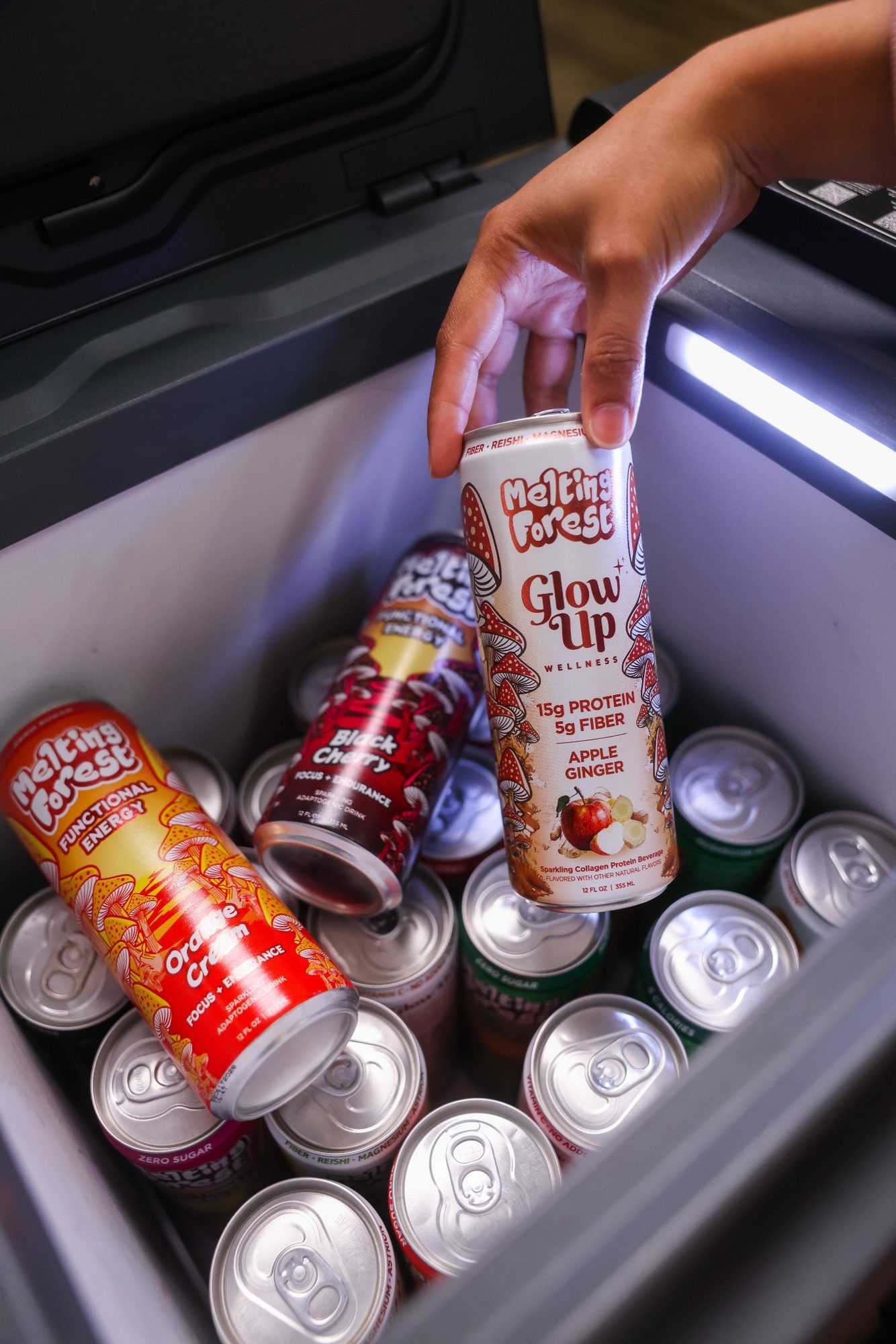
What's in Glow Up, and why isn't it marketed as a protein drink? It's 15g collagen, 5g fiber, and zero caffeine, but it's positioned around the benefit shoppers actually want rather than a macro number, which is why it's called Glow Up instead of Protein.
How many stores carry Melting Forest? Just shy of 8,000 as of this recording, including Target, Sprouts, multiple Kroger divisions, Ralphs, Stater Bros, Bristol Farms, World Market, and a recent Canada launch.
.png)

.jpg)
.jpg)
.jpg)