Built in the Hardcore Gym, Not the Boardroom: Apollon Nutrition’s Robik Samborsky on Formulating Without Compromise
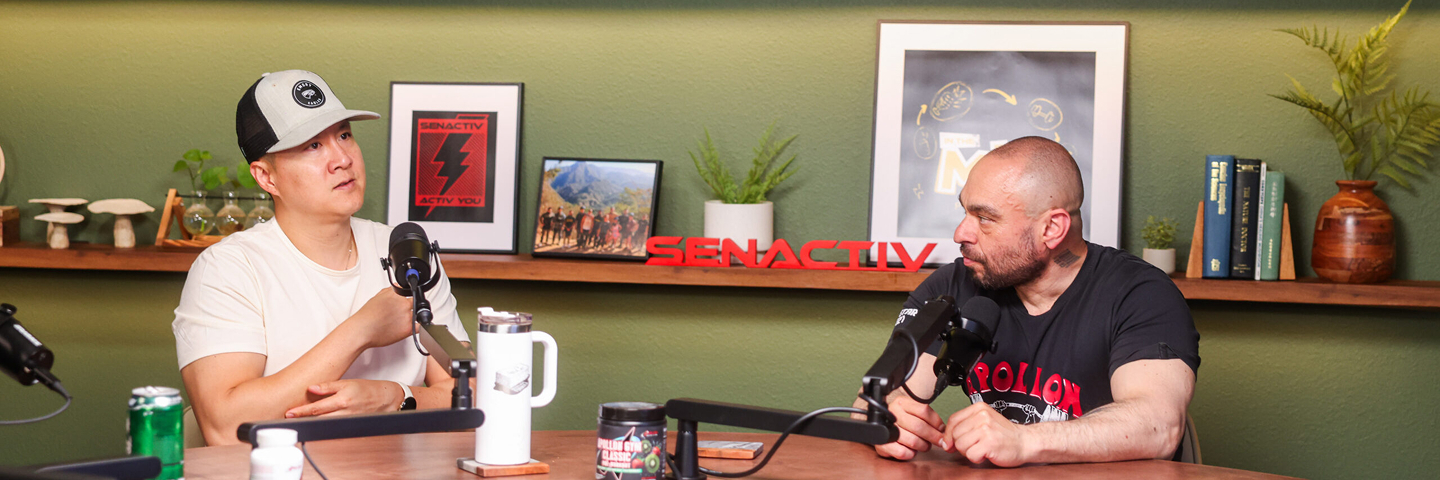
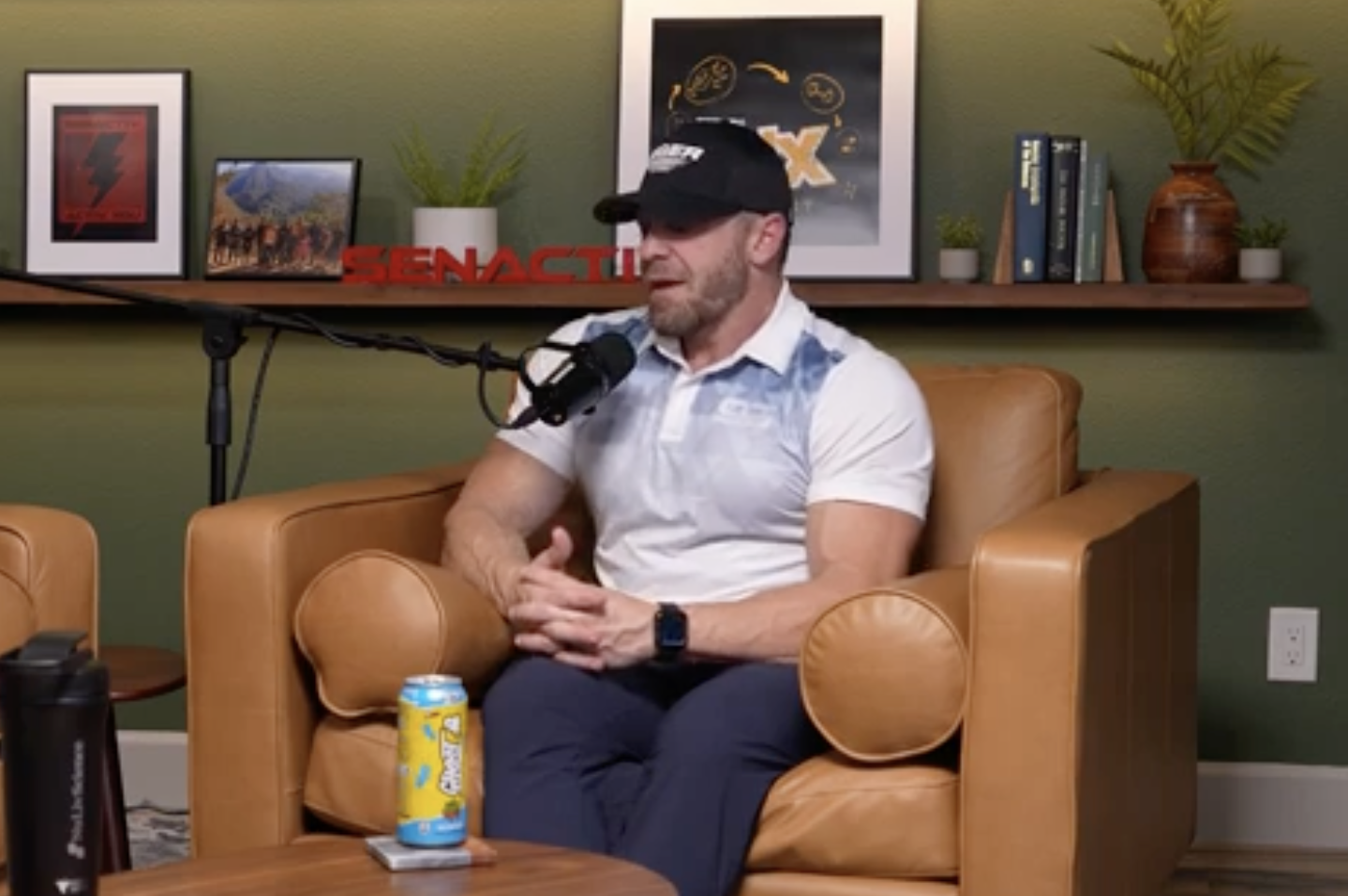
Most supplement brands start with a business plan. Apollon Nutrition started with a smoothie bar and a set of branded water bottles nobody was supposed to notice. On the latest episode of the In the Mix Podcast, founder Robik Samborsky sits down to walk through how a gym in Edison, New Jersey, became a two-time Brand of the Year winner without a single paid ad, and why he still won’t dilute a formula to make it easier to sell.
Samborsky’s story doesn’t read like a typical founder profile. It reads like a case study in refusing to take the easy version of anything: not immigration, not ownership, not formulation, not loyalty. Here’s what stood out.
This isn’t the first time Apollon has shown up on the NuLiv blog. Back in 2024, we covered the brand’s ingredient-first philosophy in The Ascent of Apollon Nutrition. This episode goes further, straight to Samborsky himself.
From Undocumented to Unshakeable
Samborsky’s path to Apollon Gym ran through three countries before he ever set foot in the U.S. He immigrated from Ukraine to Israel to South Africa, then landed in America at 22 and spent the next five years working without documentation, taking whatever jobs he could find to get by.
He’s direct about the connection between that period and the culture he later built. A no-excuses attitude isn’t a brand slogan at Apollon. It’s the operating system Samborsky lived under before he ever owned a gym, let alone a supplement line.
Buying the Gym He Couldn’t Afford
In 2008, Samborsky bought Apollon Gym for $225,000. He had $70,000 saved. He financed the rest over four and a half years, and for the first several years he worked from 5 a.m. to midnight, seven days a week, to make it work.
There was no cushion and no fallback plan. The gym had to work because the alternative wasn’t an option.
The Product Nobody Meant to Sell
Apollon Nutrition wasn’t a business plan either. The previous gym owner had branded water bottles made up, and Samborsky wanted something similar for his own smoothie bar. That’s the entire origin story. A supplement company that now competes for industry-wide Brand of the Year honors started as one gym owner wanting bottles that looked as good as the last guy’s.
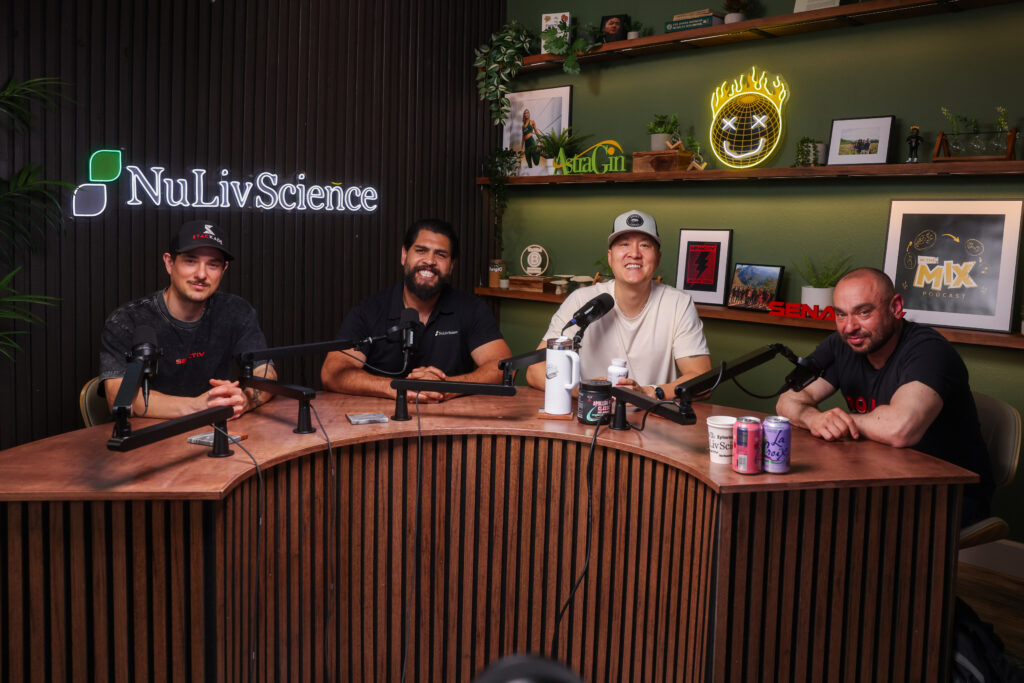
Most supplement brands start with a business plan. Apollon Nutrition started with a smoothie bar and a set of branded water bottles nobody was supposed to notice. On the latest episode of the In the Mix Podcast, founder Robik Samborsky sits down to walk through how a gym in Edison, New Jersey, became a two-time Brand of the Year winner without a single paid ad, and why he still won’t dilute a formula to make it easier to sell.
Samborsky’s story doesn’t read like a typical founder profile. It reads like a case study in refusing to take the easy version of anything: not immigration, not ownership, not formulation, not loyalty. Here’s what stood out.
This isn’t the first time Apollon has shown up on the NuLiv blog. Back in 2024, we covered the brand’s ingredient-first philosophy in The Ascent of Apollon Nutrition. This episode goes further, straight to Samborsky himself.
From Undocumented to Unshakeable
Samborsky’s path to Apollon Gym ran through three countries before he ever set foot in the U.S. He immigrated from Ukraine to Israel to South Africa, then landed in America at 22 and spent the next five years working without documentation, taking whatever jobs he could find to get by.
He’s direct about the connection between that period and the culture he later built. A no-excuses attitude isn’t a brand slogan at Apollon. It’s the operating system Samborsky lived under before he ever owned a gym, let alone a supplement line.
Buying the Gym He Couldn’t Afford
In 2008, Samborsky bought Apollon Gym for $225,000. He had $70,000 saved. He financed the rest over four and a half years, and for the first several years he worked from 5 a.m. to midnight, seven days a week, to make it work.
There was no cushion and no fallback plan. The gym had to work because the alternative wasn’t an option.
The Product Nobody Meant to Sell
Apollon Nutrition wasn’t a business plan either. The previous gym owner had branded water bottles made up, and Samborsky wanted something similar for his own smoothie bar. That’s the entire origin story. A supplement company that now competes for industry-wide Brand of the Year honors started as one gym owner wanting bottles that looked as good as the last guy’s.
Growth Without a Playbook
No Website, No Distribution, No Problem
Apollon Nutrition hit $100,000 in revenue in its first year and roughly half a million by year three, selling exclusively out of one gym. No paid marketing. No outside sales reps. No website to speak of. Just product moving off a shelf because the people using it kept coming back.
Turning Intimidation Into Community
Apollon Gym’s reputation as a hardcore, judgment-free training space for serious lifters became the draw in its own right. People who’d normally be intimidated by a gym like that started stopping by anyway, sometimes just for a shake or a scoop of pre-workout. Once they realized the culture wasn’t as unwelcoming as its reputation suggested, they stuck around, and so did the customer base for the supplements.
Back-to-Back Brand of the Year
By 2021 and 2022, Apollon Nutrition had earned consecutive Brand of the Year recognition in the industry, all while operating with a team of under 10 people. No large marketing department, no outside investors driving the timeline. Just a small team building a product people wanted enough to talk about.
Formulating for the Room, Not the Shelf
This is the section that will resonate most with the formulators and ingredient buyers reading this. The broader pre-workout market in 2026 is having its own reckoning over dosing transparency, with more brands moving toward fully disclosed labels as consumer distrust of proprietary blends keeps growing. Samborsky was making that argument a decade before it became a market trend.
Dosed for the Audience That Asked For It
When Apollon’s customers started noticing that other high-stimulant pre-workouts were quietly getting watered down, the brand went the opposite direction. Instead of chasing a broader, more conservative audience, Apollon built formulas specifically for lifters who wanted maximum intensity, not mass-market appeal.
Refusing to Dilute the Flagship
Different regions have different compliance rules, and the easy fix is usually to reformulate a core product to satisfy the strictest market. Apollon does the opposite. Rather than water down its flagship formulas, the brand builds separate, fully compliant lines so the original formula never gets diluted for anyone, in any market.
Calling Out Underdosed Trends
Samborsky is openly critical of brands that lean on trendy ingredient names dosed too low to do anything measurable. In an industry where a headline ingredient can appear on a label at a fraction of its clinically studied amount, he treats that practice as dishonest to the customer rather than clever positioning.
It’s a familiar formulation philosophy for anyone who has looked closely at NuLiv Science’s own ingredient portfolio. Apollon’s product line already includes both:
AstraGin®, used across formulas like Bareknuckle and Casanova to support nutrient absorption, and Zylaria®, included in sleep and recovery formulas such as From Dusk Till Dawn. Both ingredients show up at doses tied to Apollon’s own published research references rather than as trend-chasing additions, which is exactly the standard Samborsky describes holding the rest of his lineup to.
Public Accountability
When a formulation issue caused a clumping problem in one product, Apollon pulled it from shelves and Samborsky posted a public apology rather than quietly reformulating and hoping nobody noticed. For a brand built on trust with a hardcore, detail-oriented customer base, that kind of transparency isn’t optional.
Relationships Over Contracts
A Handshake That Lasted Nine Years
Apollon signed MMA champion Cory Anderson to a one-year, product-only sponsorship deal with no cash component. Neither side ever renewed it on paper. Nine years later, the partnership is still going.
Loyalty Tested and Proven
When Anderson later negotiated a deal with Monster Energy, he made clear upfront that continuing to represent Apollon wasn’t up for discussion. Samborsky points to that moment as the clearest proof he has that trust with an athlete outperforms a bigger check.
Slow and Steady as Strategy
Samborsky’s core philosophy is incremental, sustainable improvement over chasing a viral moment. He treats long-term customer loyalty as worth more than a single trending clip, which tracks with a brand that grew from one gym to an industry name without ever running a paid ad campaign to get there.
The Throughline
Every part of Samborsky’s story circles back to the same idea: don’t cut the corner just because you can. Whether that’s an immigration story, a mortgage on a gym, a formulation decision, or a sponsorship deal, the harder, slower version is the one Apollon keeps choosing.
It’s also a useful reminder for anyone formulating on the ingredient side of this industry. Brands built on real dosing and real relationships tend to outlast the ones built on whichever ingredient is trending this quarter.
Watch the full conversation with Robik Samborsky here: https://youtu.be/PLBAtYejyrY. For formulators building their own no-compromise product line, explore NuLiv Science’s ingredient portfolio or request a sample to start dosing your own formula right.
Frequently Asked Questions
Why do some pre-workout supplements feel more effective than others?
It usually comes down to dosing, not branding. Ingredients like L-citrulline and beta-alanine only produce a noticeable effect at specific clinical thresholds. A supplement with the right ingredients at the wrong amounts can look identical on the label to one that’s actually dosed to work.
What is a proprietary blend, and why does it matter?
A proprietary blend lists a group of ingredients under one combined weight instead of disclosing each amount individually. That makes it impossible to know whether any single ingredient is dosed at a level shown to do anything in clinical research, which is why fully disclosed labels have become the standard formulators and informed consumers look for.
Who is Robik Samborsky and what is Apollon Nutrition?
Robik Samborsky is the founder of Apollon Nutrition and owner of Apollon Gym in Edison, New Jersey. He bought the gym in 2008 and later built Apollon Nutrition into a two-time Brand of the Year supplement company, known in the industry for fully disclosed, clinically dosed formulas.
How did Apollon Nutrition grow without paid advertising?
The brand grew entirely out of Apollon Gym’s own customer base in its first several years, reaching roughly half a million dollars in revenue by year three with no outside sales reps and no paid marketing. Word of mouth from a loyal, hardcore training community did the work instead.
What does it mean for a pre-workout ingredient to be underdosed?
An ingredient is underdosed when it appears on a label at an amount well below what’s been shown to produce an effect in research. Beta-alanine, for example, is generally studied in gram-level daily doses. A formula listing beta-alanine in milligrams as a trace addition is including the name without the amount that makes it work.
Where can I listen to or watch the NuLiv Science Podcast episode with Robik Samborsky?
The full episode is live now here, right alongside this post, with the complete video conversation covering Samborsky’s background, Apollon’s growth story, and his formulation philosophy. Check the NuLiv Science Podcast page or YouTube channel for the link.
Growth Without a Playbook
No Website, No Distribution, No Problem
Apollon Nutrition hit $100,000 in revenue in its first year and roughly half a million by year three, selling exclusively out of one gym. No paid marketing. No outside sales reps. No website to speak of. Just product moving off a shelf because the people using it kept coming back.
Turning Intimidation Into Community
Apollon Gym’s reputation as a hardcore, judgment-free training space for serious lifters became the draw in its own right. People who’d normally be intimidated by a gym like that started stopping by anyway, sometimes just for a shake or a scoop of pre-workout. Once they realized the culture wasn’t as unwelcoming as its reputation suggested, they stuck around, and so did the customer base for the supplements.
Back-to-Back Brand of the Year
By 2021 and 2022, Apollon Nutrition had earned consecutive Brand of the Year recognition in the industry, all while operating with a team of under 10 people. No large marketing department, no outside investors driving the timeline. Just a small team building a product people wanted enough to talk about.
Formulating for the Room, Not the Shelf
This is the section that will resonate most with the formulators and ingredient buyers reading this. The broader pre-workout market in 2026 is having its own reckoning over dosing transparency, with more brands moving toward fully disclosed labels as consumer distrust of proprietary blends keeps growing. Samborsky was making that argument a decade before it became a market trend.
Dosed for the Audience That Asked For It
When Apollon’s customers started noticing that other high-stimulant pre-workouts were quietly getting watered down, the brand went the opposite direction. Instead of chasing a broader, more conservative audience, Apollon built formulas specifically for lifters who wanted maximum intensity, not mass-market appeal.
Refusing to Dilute the Flagship
Different regions have different compliance rules, and the easy fix is usually to reformulate a core product to satisfy the strictest market. Apollon does the opposite. Rather than water down its flagship formulas, the brand builds separate, fully compliant lines so the original formula never gets diluted for anyone, in any market.
Calling Out Underdosed Trends
Samborsky is openly critical of brands that lean on trendy ingredient names dosed too low to do anything measurable. In an industry where a headline ingredient can appear on a label at a fraction of its clinically studied amount, he treats that practice as dishonest to the customer rather than clever positioning.
It’s a familiar formulation philosophy for anyone who has looked closely at NuLiv Science’s own ingredient portfolio. Apollon’s product line already includes both:
AstraGin®, used across formulas like Bareknuckle and Casanova to support nutrient absorption, and Zylaria®, included in sleep and recovery formulas such as From Dusk Till Dawn. Both ingredients show up at doses tied to Apollon’s own published research references rather than as trend-chasing additions, which is exactly the standard Samborsky describes holding the rest of his lineup to.
Public Accountability
When a formulation issue caused a clumping problem in one product, Apollon pulled it from shelves and Samborsky posted a public apology rather than quietly reformulating and hoping nobody noticed. For a brand built on trust with a hardcore, detail-oriented customer base, that kind of transparency isn’t optional.
Relationships Over Contracts
A Handshake That Lasted Nine Years
Apollon signed MMA champion Cory Anderson to a one-year, product-only sponsorship deal with no cash component. Neither side ever renewed it on paper. Nine years later, the partnership is still going.
Loyalty Tested and Proven
When Anderson later negotiated a deal with Monster Energy, he made clear upfront that continuing to represent Apollon wasn’t up for discussion. Samborsky points to that moment as the clearest proof he has that trust with an athlete outperforms a bigger check.
Slow and Steady as Strategy
Samborsky’s core philosophy is incremental, sustainable improvement over chasing a viral moment. He treats long-term customer loyalty as worth more than a single trending clip, which tracks with a brand that grew from one gym to an industry name without ever running a paid ad campaign to get there.
The Throughline
Every part of Samborsky’s story circles back to the same idea: don’t cut the corner just because you can. Whether that’s an immigration story, a mortgage on a gym, a formulation decision, or a sponsorship deal, the harder, slower version is the one Apollon keeps choosing.
It’s also a useful reminder for anyone formulating on the ingredient side of this industry. Brands built on real dosing and real relationships tend to outlast the ones built on whichever ingredient is trending this quarter.
Watch the full conversation with Robik Samborsky here: https://youtu.be/PLBAtYejyrY. For formulators building their own no-compromise product line, explore NuLiv Science’s ingredient portfolio or request a sample to start dosing your own formula right.
Frequently Asked Questions
Why do some pre-workout supplements feel more effective than others?
It usually comes down to dosing, not branding. Ingredients like L-citrulline and beta-alanine only produce a noticeable effect at specific clinical thresholds. A supplement with the right ingredients at the wrong amounts can look identical on the label to one that’s actually dosed to work.
What is a proprietary blend, and why does it matter?
A proprietary blend lists a group of ingredients under one combined weight instead of disclosing each amount individually. That makes it impossible to know whether any single ingredient is dosed at a level shown to do anything in clinical research, which is why fully disclosed labels have become the standard formulators and informed consumers look for.
Who is Robik Samborsky and what is Apollon Nutrition?
Robik Samborsky is the founder of Apollon Nutrition and owner of Apollon Gym in Edison, New Jersey. He bought the gym in 2008 and later built Apollon Nutrition into a two-time Brand of the Year supplement company, known in the industry for fully disclosed, clinically dosed formulas.
How did Apollon Nutrition grow without paid advertising?
The brand grew entirely out of Apollon Gym’s own customer base in its first several years, reaching roughly half a million dollars in revenue by year three with no outside sales reps and no paid marketing. Word of mouth from a loyal, hardcore training community did the work instead.
What does it mean for a pre-workout ingredient to be underdosed?
An ingredient is underdosed when it appears on a label at an amount well below what’s been shown to produce an effect in research. Beta-alanine, for example, is generally studied in gram-level daily doses. A formula listing beta-alanine in milligrams as a trace addition is including the name without the amount that makes it work.
Where can I listen to or watch the NuLiv Science Podcast episode with Robik Samborsky?
The full episode is live now here, right alongside this post, with the complete video conversation covering Samborsky’s background, Apollon’s growth story, and his formulation philosophy. Check the NuLiv Science Podcast page or YouTube channel for the link.
References
Pérez-Guisado J, Jakeman PM. Citrulline malate enhances athletic anaerobic performance and relieves muscle soreness. J Strength Cond Res. 2010;24(5):1215-1222. PMID: 20386132
Hobson RM, Saunders B, Ball G, Harris RC, Sale C. Effects of β-alanine supplementation on exercise performance: a meta-analysis. Amino Acids. 2012;43(1):25-37. PMID: 22270875
Apollon Nutrition. apollonnutrition.com
NuLiv Science. AstraGin® ingredient page
NuLiv Science. Zylaria® ingredient page
*These statements have not been evaluated by the Food and Drug Administration. This product is not intended to diagnose, treat, cure or prevent any disease.
*Other NuLiv entities such as NuLiv Biomedicine and NuLiv Taiwan have not gone through the Certified B Process.
*Please be aware that only job opportunities listed on NuLiv Science’s official careers page are legitimate. We’ll NEVER request financial or personal identifying information from you online.
.png)

.jpg)
.jpg)
.jpg)